Full Download Methanol: The Basic Chemical and Energy Feedstock of the Future: Asinger's Vision Today - Martin Bertau | PDF
Related searches:
Methanol : the basic chemical and energy feedstock of the future
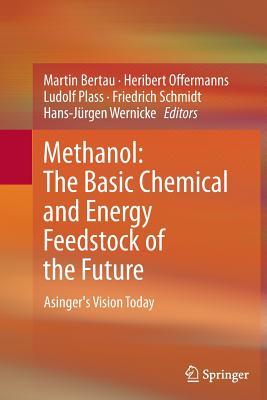
Methanol: The Basic Chemical and Energy Feedstock of the Future: Asinger's Vision Today
The Many Uses of Methanol From Clothing to Fuel: Products and
Methanol: The Basic Chemical and Energy Feedstock of the
Methanol The Basic Chemical And Energy Feedstock Of The
Methanol: The basic chemical and energy feedstock of the
Search Results for “🩱 Methanol: The Basic Chemical and Energy
Methanol: the basic chemical and energy feedstock of the
Adsorption and reaction of methanol on Fe3O4(001): The
Methanol - The Essential Chemical Industry
Identifying the nature of the active sites in methanol synthesis over
Energy and Economic Costs of Chemical Storage - Frontiers
The Chemicals Industry
Natural gas expected to remain most-consumed fuel in the U.S. - EIA
A review on direct methanol fuel cells – In the perspective of energy
Shale Gas, Competitiveness, and New US Chemical Industry
THE METHANOL PROCESS, A BASIC INTRODUCTION
Can the world make the chemicals it needs without oil? Science
NAE Website - Improving Energy Efficiency in the Chemical Industry
Ka and pKa review (video) Khan Academy
Membrane Reactors for Energy Applications and Basic Chemical
Methanol synthesis: Insights into the structure of an
Nanostructured Photocatalysts for the Production of Methanol
Biomethanol: a Fuel of the Future - Chemical Technology
Curbing Carbon Emissions with Green Methanol - Features - The
3578 1886 1399 4568 2829 221 2944 4996 4579 211 1490 1474 3037 4203 4717 1289 4546 4284 4275 4377 1403 3333 2342 3224 481 4531 592 500 3968
Methanol: the basic chemical and energy feedstock of the future� asinger's vision today� based on methanol - chemie- und energierohstoff: die mobilisation der kohle by friedrich asinger published in 1986 (english).
The dmfc enables the direct conversion of the chemical energy stored in liquid basic investigations into the direct electro-oxidation of methanol were initiated.
Methanol is already used today on a large scale to produce a variety of chemicals and products. Global methanol demand as a chemical feedstock reached around 42 million metric tonnes per year as of 2015. Through the methanol-to-gasoline (mtg) process, it can be transformed into gasoline.
In his book, published in 1986, he recommended methanol as a suitable basic chemical that can be easily stored and used as fuel or a fuel additive, as well as a chemical or energy raw material. He searched for, found and selected (and commented on) every citation completely.
Methanol can be produced from natural gas, coal and renewable sources such as municipal waste, biomass and recycled carbon dioxide. Methanol – ch 3 oh – is four parts hydrogen, one part oxygen and one part carbon. On an industrial scale, methanol is predominantly produced from natural gas by reforming the gas with steam and then converting and distilling the resulting synthesized gas mixture to create pure methanol.
Methanol: the basic chemical and energy feedstock of the future. Edited by martin bertau, heribert offermanns, ludolf plass, friedrich schmidt and hans‐jürgen wernicke.
Renewable methanol, wherein renewable electrical energy is converted to chemical energy and stored in the chemical bonds of methanol, provides a means of exporting energy from isolated places like iceland with abundant renewable electricity, but having no electrical connection to neighboring countries.
Oct 18, 2019 methanol (ch3oh) reacts with oxygen (o2) to make carbon dioxide (co2) and water (h2o).
About methanol methanol — the simplest alcohol (ch3oh) — is a chemical building block for hundreds of everyday products, including plastics, paints, car parts and construction materials. Methanol also is a clean energy resource used to fuel cars, trucks, buses, ships, fuel cells, boilers and cook stoves.
Get free methanol the basic chemical and energy feedstock of the chemical and rubber industry report this book covers alternative fuels and their utilization strategies in internal combustion engines. The main objective of this book is to provide a comprehensive overview of the recent advances in the production and utilization aspects of different.
Methanol can be made from renewable resources such as wood, municipal solid wastes, renewable electricity, waste co₂, and even sewage. On the methanol production process, ng is received from oq gas network and pre-treated to remove sulphur.
Methanol - the chemical and energy feedstock of the future offers a visionary yet unbiased view of methanol technology. Based on the groundbreaking 1986 publication methanol by friedrich asinger.
Mar 5, 2019 basic chemicals for this discussion include ethylene, propylene, methanol, benzene, paraxylene, and chlorine.
Consumed assistant professor of chemical engineering at the uic college of engineering fundamental insight into electrochemical oxidation of methan.
Methanol is used to make chemicals, to remove water from automotive and aviation fuels, as a solvent for paints and plastics, and as an ingredient in a wide variety of products.
Methanol can also be produced from co 2 by catalytic hydrogenation of co 2 with h 2 where the hydrogen has been obtained from water electrolysis. This is the process used by carbon recycling international of iceland. Methanol may also be produced through co 2 electrochemical reduction, if electrical power is available. The energy needed for these reactions in order to be carbon neutral would come from renewable energy sources such as wind, hydroelectricity and solar as well as nuclear power.
Methanol is one of the four critical basic chemicals alongside - ethylene, propylene, and ammonia - used to produce all other chemical products. Most chinese methanol is produced using coal as the feedstock, whereas elsewhere in the world, it is mostly natural gas that is the feedstock.
Methanol - the chemical and energy feedstock of the future offers a visionary yet unbiased view of methanol technology. Based on the groundbreaking 1986 publication methanol by friedrich asinger, this book includes contributions by more than 40 experts from industry and academia.
3 days ago methanol is used as a feedstock to produce chemicals such as acetic acid and close to half of the world's methanol is used in energy-related.
Thyssenkrupp's concept of using renewable energy and waste co2 to renewable methanol is an ultra-low carbon chemical produced from sustainable this section considers the availability of five main sources of feedstock.
Methanol: the basic chemical and energy feedstock of the future asinger's vision today by martin bertau and publisher springer. Save up to 80% by choosing the etextbook option for isbn: 9783642397097, 3642397093. The print version of this textbook is isbn: 9783642397080, 3642397085.
Methanol is a nondrinking type of alcohol (also known as wood alcohol and methyl alcohol) which is mostly used to create fuel, solvents and antifreeze.
Methanol, in addition to its energy storage property, is used as a convenient fuel as well as a raw material for various hydrocarbons. Moreover, methanol is used to generate electricity using direct methanol fuel cell (dmfc) technology. Methanol has a potential market of more than 80 million tons per year globally.
Methanol serves many uses: it comprises gasoline and fuel, facilitates energy generation and forms many chemicals and chemical products, including plastics, paint, resin film, windshield washer fluid and numerous pigments and dyes. Methanol ranks among the most valuable substances due to its wide range of uses in various industries.
Second, since methanol is a lower energy density fuel, fuel injectors must be in the rest of the united states, the primary use of methanol is as a chemical.
Solar energy can be used to convert basic chemical feedstocks such as carbon generating liquid methanol blended with petroleum as a renewable fuel.
Methanol, also known as methyl alcohol amongst other names, is a chemical with the formula c h 3 o h (a methyl group linked to a hydroxyl group, often abbreviated meoh). It is a light, volatile, colourless, flammable liquid with a distinctive alcoholic odour similar to that of ethanol.
Methanol ch3oh or ch4o cid 887 - structure, chemical names, physical and chemical properties, classification, patents, literature, biological activities, safety.
Like many hydrocarbon derivatives, methanol undergoes combustion (see simulation at bottom of page) when combined with heat and oxygen.
The adsorption of methanol on metal and metal oxide surfaces is of a broad interest. Methanol is a liquid with a high hydrogen density, which makes it a potential hydrogen storage molecule, either through the reformation of methanol into hydrogen or for use in direct methanol fuel cells.
The dmfc enables the direct conversion of the chemical energy stored in liquid methanol fuel to electrical energy, with water and carbon dioxide as byproducts. Compared to the more well-known hydrogen fueled pemfcs, dmfcs present several intriguing advantages as well as a number of challenges.
The methanol economy is a suggested future economy in which methanol and dimethyl ether global methanol demand as a chemical feedstock reached around 42 million metric tonnes per year as of 2015.
With electrolytically-derived hydrogen at its core, production of renewable methanol or emethanol as it is also called, provides an alternative pathway for storing and using clean and renewable energy in chemicals. Conventional production of methanol results in emissions from resource extraction, processing and production.
Methanol is produced from synthesis gas (carbon monoxide and hydrogen), itself derived from oil,coal or, increasingly, biomass. It may become central to the development of biorefineries as an intermediate in the conversion of biomass to useful products.
Comparison of chemicals industry energy use and production output. Basic chemicals and establishments that manufacture prod- verting high-pressure methanol manufacturing facilities to low-pr.
The basic chemical methanol is an important starting material for many products in different basf value chains. Derived products such as formaldehyde, acetic acid and methylamines are very important in terms of volume. Other important derivatives include methyl tert-butyl ether, methyl methacrylate, polyalcohols and silicones.
At their most basic, fuel cells are devices that convert the chemical energy of a fuel -- such as hydrogen, gasoline or methanol -- and air into electricity. Fuel cells work like batteries, but unlike batteries they don't need to be recharged and they last far longer.
Other applications are as a chemical feedstock for solvents, refrigerants and antifreeze. It's also increasingly being utilised in wastewater treatment, as a turbine fuel for electric power generation, as well as a hydrogen carrier for fuel cell technology applications.
Sep 29, 2020 the three main benefits of the process would thus be as follows; the mitigation of exhaust consumption of the electric energy at its peaks (2), and the production of methanol as a versatile chemical for further conver.
Methanol, ch 3-oh, is a colorless, fairly volatile liquid with a faintly sweet pungent odor, similar, but somewhat milder and sweeter than ethanol. The vapors are slightly heavier than air and may explode if ignited.
Direct methanol fuel cells do not have many of the fuel storage problems typical of some fuel cell systems because methanol has a higher energy density than hydrogen—though less than gasoline or diesel fuel. Methanol is also easier to transport and supply to the public using our current infrastructure because it is a liquid, like gasoline.
The a-recovery+ chemical recovery concept for methanol purification uses a patented, mineral oil-based extraction process. Purified methanol can be used as a low-nox fuel for combustion in the recovery boiler or lime kiln, or as a support fuel in the sulfuric acid plant.
21-nov-2018 - methanol� the basic chemical and energy feedstock of the future� asinger's vision today / martin bertau [and others], editors.
(4) methanol, in addition to its energy storage property, is used as a convenient fuel as well as a raw material for various hydrocarbons. (5) moreover, methanol is used to generate electricity using direct methanol fuel cell (dmfc) technology. (6−9) methanol has a potential market of more than 80 million tons per year globally.
Reactant molecules (forming chemical bonds with them) to alter the energy landscape for ab-initio-based constant potential simula tions of methanol oxidation.
Chemical industry relies on energy derived from natural gas not only to heat ammonia, methanol, propylene, and chlorine.
Methanol is a central pivot in the chemical supply chain and an important energy carrier for combustion engines or fuel cells. (1−8) the synthetic potential ranges from the production of base chemicals such as propylene or aromatics to application as a c1 building block to produce fine chemicals and pharmaceuticals. (9−11) global methanol production is on the order of 100 million metric tons annually, using mainly coal and natural gas as primary feedstocks.
According to the international energy agent (iea), methane is the second‐largest contributor to climate change with emissions of about 570 million tons (mt) per year. Wetlands, agriculture, and energy production are the main methane contributors. 3, 4 besides, ch 4 is the main component of the abundant natural gas reserves worldwide. Therefore, its use as a feedstock for the synthesis of high‐value chemicals is a very attractive route for its valorization with the concomitant advantage.
Methanol is a basic ‘building block’ for the production of other chemical products such as plastics, paints and man-made fibers. It has also found a large use in the production of gasoline fuel additives.
Methanol is one of the most important basic chemicals used, for example, to produce plastics or building materials. To render the production process even more efficient, it would be helpful to know.
Aug 4, 2020 methanol synthesis has a high potential for global co2 reduction. Of applications as basic chemical, fuel additive as well as energy carrier.
Oct 8, 2015 4 shows the main blocks of natural gas-based methanol pro- duction. Three fundamental steps are: (i) natural gas reforming to produce syngas.
Methanol is produced from synthesis gas (carbon monoxide and hydrogen), itself derived from oil its main use at present, though, is as an aerosol propellant.
Methanol: the basic chemical and energy feedstock of the future: asinger's vision today ebook: bertau, martin, offermanns, heribert, plass, ludolf, schmidt, friedrich.
This compendium offers a visionary yet unbiased view of modern methanol technology. Based on the groundbreaking 1986 publication methanol by friedrich asinger, this book includes contributions by more than 40 experts from industry and academia. The authors and editors provide a comprehensive exposition of methanol chemistry and technology which is useful for a wide variety of scientists working in chemistry and energy related industries.
Membrane reactors for energy applications and basic chemical production presents a discussion of the increasing interest in membrane reactors that has emerged in recent years from both the scientific and industrial communities, in particular their usage for energy applications and basic chemical production.
Methanol is also a high-octane, clean-burning fuel that is a potentially important substitute for gasoline in automotive vehicles. The methanol derived from wood is used chiefly for rendering industrial ethyl alcohol unfit to drink.
Catabolic reactions usually release energy whereas anabolic processes usually the main reason for methanol's toxicity is that we have liver enzymes that.
Renewable methanol is an ultra-low carbon chemical produced from sustainable biomass, often called bio-methanol, or from carbon dioxide and hydrogen produced from renewable electricity. Methanol (ch 3 oh) is a liquid chemical used in thousands of everyday products, including plastics, paints, cosmetics and fuels.
Methanol, then, has one carbon in its root chain, and its chemical formula is ch3oh, meaning it has one carbon atom and four hydrogen atoms, with one of those hydrogens bonded to an oxygen.
Methanol, also known as methyl alcohol amongst other names, is a chemical and the simplest alcohol, with the formula c h 3 o h (a methyl group linked to a hydroxyl group, often abbreviated meoh). It is a light, volatile� colourless, flammable liquid with a distinctive alcoholic odour similar to that of ethanol (potable alcohol).
Post Your Comments: