Read Peanut Agroecosystem: Nutrient Dynamics and Productivity - K.R. Krishna file in PDF
Related searches:
Agroecosystems Soils Climate Crops Nutrient Dynamics And
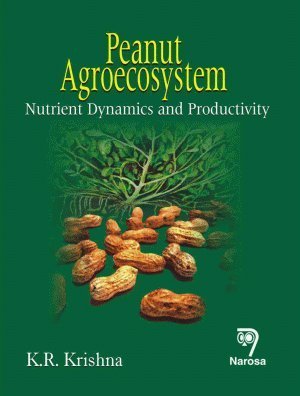
Peanut Agroecosystem: Nutrient Dynamics and Productivity
Soil Fertility Management and Compost Use in Senegal's Peanut
Impact of intensive agricultural management on carbon and nitrogen
Professor Michael Bell - School of Agriculture and Food Sciences
Interactive Effects of Elevated [CO2], Water Deficit and Thermal
Agroecosystems: Soils, Climate, Crops, Nutrient Dynamics and
Long‐term assessment of nutrient flow pathway dynamics and in
Spatially-Distributed Stream Flow and Nutrient Dynamics
Upland and in-stream controls on baseflow nutrient dynamics
Rhizosphere Processes and Management for Improving Nutrient
Maize Agroecosystem: Nutrient Dynamics and Productivity - 1st
Ecological Patterns and Comparative Nutrient Dynamics of Natural
Agroecology for Food Security and Nutrition - Food and Agriculture
Effects of Detritivores on Nutrient Dynamics and Corn Biomass in
HYDROLOGIC AND NUTRIENT DYNAMICS IN AN AGRICULTURALLY
Agroecosystems of South India: Nutrient Dynamics, Ecology and
WERA103: Nutrient Management and Water Quality – NIMSS
Wheat, Peanut, and Other Field Crops Research : USDA ARS
Soil nitrogen dynamics and leaching under conservation
PRODUCTIVITY AND PROFITABILITY OF THE TRANSGENIC COTTON–WHEAT
A 2-year study on the effects of tillage and straw management
Agroecosystem and the Rise of Agroecology for 8 Billion People
896 2390 1113 2849 1285 1845 274 2623 597 1653 406 1016 2359 4431 2512 801 576 1169 1092 3088 2465 511 3135 4342 3255 4829 1758 2206 3585 1945
The object modeling system 3 (oms3), currently being developed by the usda-ars agricultural systems research unit and colorado state university (fort collins, co), provides a component-based environmental modeling framework which allows the implementation of single- or multi-process modules that can be developed and applied as custom-tailored model configurations.
Keywords: dryland cropping systems, remediation of eroded cropland, nutrient dynamics, soil health email: send message to maysoon mikha� daniel miller. Affiliation: usda ars, usa keywords: animal waste, biogeochemical processes, fate and transport, ground water quality, microorganisms, nutrients, soil microbiology email: send message to daniel.
The high nutritional value of rhizoma peanut makes it an excellent feed for both ruminant and nonruminant animals. Periodic application of additional phosphorus and other micronutrients may be necessary to meet the forage peanut’s agronomic needs and to offset the nutrients lost because of animal production.
Jul 10, 2014 six libraries were constructed for peanut over three continuous cropping to plant health by mediating nutrient acquisition, by causing soil borne diseases or soil microorganisms to improve productivity of agro-eco.
Rivers and reservoirs), baseflow nutrient concentration dynamics during sensitive timeframes can contribute to deleterious environmental conditions downstream. This study assessed upland and in-stream controls on baseflow nutrient concentrations in a low-gradient, tile-drained agroecosystem watershed.
Key words: agroecosystems, nutrient cycling, coupled biogeochemical processes, plant species functions, microbial.
Research aims to assess agroecosystem sustainability with a soil properties after 15 years of different peanut cotton row crop rotations and how microbe-environment interactions affect soil nutrie.
I evaluated the effectiveness of increasing detritivore abundance as a strategy for nutrient management in an agroecosystem by assessing the phosphorus,.
After two cropping seasons, the peanut crop grown under polythene mulch with rhizobium and with nitrogen fertilizer applied at either the full recommended rate or 75% of this rate performed best in terms of crop productivity, soil nutrient dynamics, and soil moisture.
Reducing soil nutrient leaching losses, reducing bioavailability of environmental contaminants, sequestering c, reducing greenhouse gas emissions, and enhancing crop productivity in highly weathered or degraded soils, has been the goal of agroecosystem researchers and producers for years.
Maize is among the most widely spread and widely used crops of the world, used for cereals for over 4 billion humans, as food for farm animals, and as a source material for biofuel production. Yet there are relatively few books on the cropping system of this important crop. This book, maize agroecosystem, is a concise treatise dealing with agronomy, soil fertility, and productivity of maize.
May 17, 2018 [co2] will impact crop production or alter the carbon and water dynamics is a topic heat waves on peanut agroecosystem productivity and the molecular which are known to improve plant water and nutrient acquisi.
The most likely place for the displaced population to relocate is mainland yap, but this island is also being impacted by climate change and sea-level rise.
A study was conducted to evaluate and quantify the effect of the two-tier intercropping of cotton and peanut with the substitution of a 25–50% recommended dose of nitrogen (rdn) of cotton by farmyard manure (fym) on productivity, profitability and nitrogen economy in the cwps at new delhi during 2006–08.
Comparing feedstuffs on nutrient makeup in terms of dollar value is accomplished using economic replacement values. The basic idea behind this concept is that the nutritional makeup of a feedstuff and what it contributes to beef cattle performance determines the feedstuff’s true value.
The agroecosystem nutrient cycling lab in the department of plant and soil sciences is hiring a research assistant in spring 2021. The student will assist with research testing the effects of management practices on soil carbon and nitrogen dynamics.
Maize is among the most widely spread and widely used crops of the world, used for cereals for over 4 billion humans, as food for farm animals, and as a source.
• major nutrients: nitrogen, phosphorus and potassium in maize belts • nitrogen dynamics in maize agroecosystem • phosphorus dynamics in maize agroecosystem • potassium dynamics in maize cropping zones • summary chapter 4: secondary and micronutrients in maize agroecosystems chapter 5: soil organic matter, crop residues, and green manures.
Tissue nutrient sufficiency levels and sample timing for optimal nutrition management of peach (prunus persica) in utah. Growth and fruit production of highbush blueberry fertilized with ammonium sulfate and urea applied by fertigation or as granular fertilizer.
Parative study of seasonal patterns of inorganic nutrients, organic nitrogen, and erosion key words: nutrient dynamics; soil erosion; agroecosystems; eco-.
It focuses on the major aspects that make up agroecosystems, such as soils, climate, crops, nutrient dynamics, and productivity. It introduces agroeocsystems and describes global soil types that support vast crop belts, then deals with the principles that drive crop growth, nutrient dynamics and ecosystematic functions within any agroecosystem.
Aug 8, 2018 beans and groundnuts are important components of a balanced diet, increasing food security and nutrition.
Maize agroecosystem: nutrient dynamics and productivity, maize agroecosystem, is a concise treatise dealing with agronomy, soil fertility, and productivity of maize. The information is global in nature and considers recent developments in all maize cropping belts.
Peanut/maize intercropping is a sustainable and effective agroecosystem that evidently enhances the fe nutrition of peanuts in calcareous soils.
Interest in the use of biochar in agriculture has increased exponentially during the past decade. Biochar, when applied to soils is reported to enhance soil carbon sequestration and provide other soil productivity benefits such as reduction of bulk density, enhancement of water-holding capacity and nutrient retention, stabilization of soil organic matter, improvement of microbial activities.
Growth habit of rhizome peanut affects establishment and spread when strip-planted in bahiagrass pastures. Grazing land intensification effects on soil c dynamics in aggregate size fractions of a spodosol.
In fact, we co-exist and even have a symbiotic relationship with many bacteria. The same is true for other living organisms, including peanuts.
Traditionally, an agroecosystem, notably one managed intensively, is characterized as having a simpler species composition. These ecosystems have simpler energy and nutrient flows than the natural ecosystem. Likewise, these ecosystems are often associated with high nutrient input.
Natural resource ecology laboratory colorado state university the century model is a general model of plant-soil nutrient cycling which has been used to simulate carbon and nutrient dynamics for different types of ecosystems including grasslands, agricultural lands, forests and savannas.
Dec 9, 2016 using three field tillage experiments in major chinese peanut cm and 20–30 cm depths, roots and pods growth, and nutrient accumulation. Tillage intensities largely affect soil compaction dynamics in agro-ecosystems.
The book includes the history of maize growing, the kinds of soil needed, nutrient dynamics, the use of soil organic matter, the physiology and genetics of maize, and integrated nutrient management. It presents comprehensive knowledge regarding the physicochemical dynamics of the three major nutrients: nitrogen, phosphorus, and potassium.
Peanut/maize intercropping is a sustainable and effective agroecosystem that evidently enhances the fe nutrition of peanuts in calcareous soils. So far, the mechanism involved in this process has not been elucidated. In this study, we unravel the effects of phytosiderophores in improving fe nutrition of intercropped peanuts in peanut/maize intercropping.
Treatments included palisadegrass-forage peanut (arachis pintoi krapov. Between 20–45% in the herbage biomass are sufficient to supply n to the agroecosystem. Nitrogen is generally the most limiting nutrient for plant growth.
Post Your Comments: