Full Download Governing Europe's Marine Environment: Europeanization of Regional Seas or Regionalization of Eu Policies? - Michael Gilek file in PDF
Related searches:
1894 881 4043 1639 2367 4679 1974 3944 3935 926 860 4559 80 4450 571 4623 2556 3359 4374
Governing europe’s marine environment: key topics and challenges kristine kern and michael gilek introduction this book aims for a better understanding of the fragmented governance architecture of marine governance in europe by combining in-depth analysis of marine governance structures and processes with development of analytical perspectives.
Abp research� 1999 good practice guidelines for ports and harbours operating within or near uk european marine sites english nature, uk marine sacs project, associated british ports research and consultancy, pathfinder house, maritime way, southampton so14 3ae google scholar.
Protein corona has became a prevalent subject in the field of nanomedicine owing to its diverse role in determining the efficiency, efficacy, and the ultimate biological fate of the nanomaterials used as a tool to treat and diagnose various diseases.
Judith van leeuwen is a researcher and lecturer at the environmental policy group of wageningen university (the netherlands). She has been involved in the eu fp7 project options for delivering ecosystem-based marine management since 2010.
Governing europe’s marine environment� key topics and challenges� by kristine kern and michael gilek.
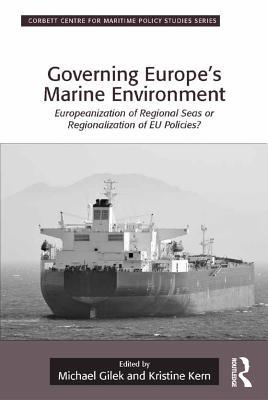
Editors: michael gilek and kristine kern (eds) governing europe's marine environment europeanization of regional.
Europe’s largest marine protected area (mpa) has been announced by natural environment minister mairi gougeon. The new mpa, off the west of scotland, will give additional protections to some of the deepest parts of scotland’s seas, protecting scotland’s unique deep sea marine ecosystems.
According to a recent report from the european environment agency, denmark has continued to make great strides in improving the health of its various ecosystems. However, the report noted, there is still more progress that needs to be made.
Lawrence juda, “the european union and ocean use management: the a functional approach to the governance of large marine ecosystems,” ocean.
In europe, there are four cooperation structures which aim to protect the marine environment and bring together member states and neighbouring countries that share marine waters: the regional sea conventions. Cooperation among member states and with third countries has been taking place through these conventions for more than 30 years.
The course was created in response to the eu’s european marine strategy and water framework directive, designed to better protect the european marine environment and the resources upon which marine-related economic and social activities depend.
Marine biodiversity and habitat loss is an ongoing challenge for europe’s seas. In this report, we examine how this challenge is addressed by key eu policies and spending programmes in parts of the atlantic and the mediterranean. While a framework is in place to protect the marine environment, eu actions have not restored seas to good environmental status nor fishing to sustainable levels in all seas.
Container ships, tankers, freighters, and cruise liners are a significant source of co2 emissions and other pollutants. Led by norway, europe is beginning to electrify its coastal vessels – but the task of greening the high seas fleet is far more daunting.
A new online platform which assesses the condition of scotland’s marine environment and the human activity it supports has been launched. More than 250 scientists have contributed to scotland’s marine assessment 2020 which brings together data from 183 studies to provide an up-to-date review of scotland’s seas.
The unep as well as the world conservation monitoring center, claims that the european countries are leading the way in marine conservation. A perfect example of this is the small city-state of monaco, located in southern france. This diminutive microstate has successfully achieved protection of the entirety of its limited marine area.
International, european and scot's law governing the marine environment exists on a legally and non-legally binding basis, with the strictest of regulations concerning marine litter more commonly found on a non-legally binding basis.
Most of the following agreements are legally binding for countries that have formally ratified them. Some, such as the kyoto protocol, differentiate between types of countries and each nation's respective responsibilities under the agreement.
We have undertaken a range of studies in this area, investigating the sources, pathways and impacts of marine litter, and exploring the effectiveness of preventative and removal measures. Clients in this field include the un, european commission and the clean europe network.
To protect the marine environment, exploration, drilling and production are conducted according to the highest industry standards and in line with the applicable eu legislation. The industry is continuously working to further improve the sustainability of its operations. Protection of coasts and oceans is a priority for the european union.
Coastal communities depend on the marine environment for their livelihoods, but the common property nature of marine resources poses major challenges for the governance of such resources. Through detailed cases and consideration of broader global trends, this volume examines how coastal communities are adapting to environmental change, and the attributes of governance that foster deliberate.
Science and policy in the governance of europe’s marine environment: the impact of europeanization, regionalization and the ecosystem approach to management gilek, michael södertörn university, school of natural sciences, technology and environmental studies, environmental science.
Eu protection of marine environment is shallow� eu action has not led to the recovery of significant marine ecosystems and habitats, according to a new special report published today by the european court of auditors (eca). Its framework to protect the marine environment is not deep enough to restore seas to good.
Marine plastics are a growing threat to the environment and marine biodiversity as 335 million tonnes of plastics was produced in 2016 with approximately three percent leaking into the oceans every year.
Marine insight focuses on providing information on various aspects of the marine world, and tries to bring forth the marvels of the blue expanse which covers a major portion of our planet earth. Marine insight makes a conscious effort to draw people’s attention toward key maritime issues that can shape the future of the marine world and of the entire human habitat.
Into the marine environment to reduce potential adverse impacts on marine life. International maritime organization marine, environment protection committee.
Europe’s marine wildlife sanctuaries are no more than “paper parks” that are failing to protect the seas, a report from conservationists has said.
Topics: biodiversity — ecosystems water and marine environment. Marine protected areas (mpas) can act as a key conservation measure to safeguard marine ecosystems and biodiversity as well as the services these ecosystems provide. The report provides an overview on progress made to date in establishing mpas and mpa networks in europe's seas, specifically mpas reported by european union (eu) member states up to and including 2012.
Published in 2011, the atlas was another first both in what it covered – an integrated assessment of scotland’s seas – and a first in that it was a collaboration between marine scotland, the scottish environment protection agency (sepa), scottish natural heritage (snh), joint nature conservation committee (jncc) and marine alliance for science and technology for scotland (masts).
This paper provides a consolidated picture of the south african legal landscape governing the protection and sustainable use of the coastal marine environment (situated at the land-sea interface), and aims to contextualise this complex ‘horrendogram’ by visually organising it into key sectors and the associated issues.
Governing climate change polycentrically� setting the scene / andrew jordan, dave huitema, jonas schoenefeld, harro van asselt and johanna forster -- international governance� polycentric governing by and beyond the unfccc / harro van asselt and fariborz zelli -- national governance: the state's role in steering polycentric action / joana setzer and michal nachmany -- transnational.
Directive 2008/56/ec of the european parliament and council establishes a framework for community action in the field of marine environmental policy, and is commonly known as the marine strategy.
Agreements together with their governing bodies established for the purpose of protecting the marine environment of the marine regions referred to in article 4, such as the convention on the protection of the marine environment of the baltic sea, the convention.
Although eu regulation (eu) 2017/1004 defines rules for the collection of data on the impact of fisheries on the wider ecosystem, including on the bycatch of sensitive species, the implementation of this regulation is dependent on the control regulation – particularly for what concerns fishing logbooks, fishing monitoring systems and remote electronic monitoring (rem).
governing europe's marine environment is a coherent up-to-date multidisciplinary analysis of current approaches and challenges to the sustainable governance of europe's marine environment. Structured in three parts, part 1 outlines general theoretical ideas about governance, governing, and governab.
During the implementation period (due to last until 31 december 2020), eu legislation relevant to the marine environment will continue to apply. However during the implementation period (due to last until 31 december 2020), eu legislation relevant to the marine environment will continue to apply.
Governance of the baltic sea region helcom), the european union (eu),.
The natural environment research council, the uk's leading public funder of environmental science. Nerc - home we are creating a unified ukri website that brings together the existing research council, innovate uk and research england websites.
Christiansen, t (1997) tensions of european governance: politicized bureaucracy and in: gilek, m, kern, k (eds) governing europe's marine environment.
The coastal and marine environment, 108 governments and the european commission the call by the unep governing council to give greater attention.
Oceans face the threats of marine and nutrient pollution, resource depletion and climate change, all of which are caused primarily by human actions. These threats place further pressure on environmental systems, like biodiversity and natural infrastructure, while creating global socio-economic problems, including health, safety and financial risks.
The coast guard's work with protected species began in the late 1700's, when the agency ensured at-sea enforcement of laws governing the whaling and sealing industry. Over time, however, hunting, fishing, and whaling took their toll on the animal populations.
Denmark “i analyse how plastic waste affects the environment in europe and beyond. Our agency even created an online app so scientists, companies and citizens can help us gather information about the marine litter found on european beaches. ” “we now have a better understanding of the plastics problem.
Currently marine pollution is an increasing threat to a healthy marine environment. Indeed, marine pollution may severely damage the environment, including ecosystems, and human health. It would be no exaggeration to say that the welfare of coastal populations relies essentially on a sound marine environment.
Governing europe's marine environment is a coherent up-to-date multidisciplinary analysis of current approaches and challenges to the sustainable governance of europe's marine environment. Structured in three parts, part 1 outlines general theoretical ideas about governance, governing, and governability and serves as a starting point for analysing the development of marine governance in europe from the perspective of different disciplines.
The un convention on the law of the sea (unclos) provides an international legal regime that governs the ocean. It creates an obligation to conserve the marine environment, but it does not provide specific mechanisms or processes for conserving marine biodiversity in abnj.
Marine research centres: this is an alternative where the facility remains in place, and is used by universities and research institutions for on site studies of the marine environment. The guidelines issued by the imo, combined with the geneva convention of 1958, the law of the sea of 1982 and the london convention of 1972 provide the major.
Stockholm environment institute (sei) is an international non-profit research and policy organisation.
Of the 51 treaty instruments for the regulation of international shipping imo has adopted so far, 21 are directly environment-related. The work of the marine environment division is, in the main, directed by the marine environment protection committee, the mepc in short, which is imo's senior technical body on marine pollution related matters.
The european environment agency's (eea) report aims to assess whether europe is meeting the goals of the european marine strategy framework directive.
Marine protected areas (mpas) worldwide are facing increasing driving forces, which represent a major and increasing challenge for mpa governance. The marine protected area governance (mpag) project examined a range of different incentives – economic, interpretative, knowledge, legal and participative – employed to address the driving forces and promote effectiveness in 20 case studies across the globe.
Marine litter, in particular plastic litter, is a growing international problem. Plastics are estimated to comprise 60-80% of all marine litter and projections estimate that the ocean will contain one ton of plastic for every three tons of fish by 2025. 80% of marine litter worldwide comes from land-based sources, with the remaining 20% coming from ocean-based sources such as derelict fishing.
Fact 2: europe’s marine environment is deteriorating fast the marine environment is faced with a number of increasingly severe threats (1) these include loss or degradation of biodiversity and changes in its structures, loss of habitats, contamination from dangerous substances, and the impacts of climate change.
Find bills considered by parliament, acts of parliament and statutory rules.
Public law and the marine pollution (marpol) treaty which bans oceangoing vessels from disposing of plastics in the marine environment. Navy is pursuing numerous activities under the prime program in order to minimize its plastic.
The european community and its member states have shared competences in marine environmental matters.
Oceans and seas are important areas of operations for the european oil and gas industry. To protect the marine environment, exploration, drilling and production are conducted according to the highest industry standards and in line with the applicable eu legislation. The industry is continuously working to further improve the sustainability of its operations.
Ieep has undertaken a number of studies on the european policies that are important for regulating the uses of the marine environment and protecting marine.
Governing marine environments is a highly complex and challenging enterprise gilek m, kern k (eds) (2015) governing europe's marine environment.
Eu member states need to co-operate to deal with many of the threats facing europe’s seas. The marine strategy framework directive (msfd) requires member states to achieve ‘good environmental.
This paper examines how the eu can best use its powers to establish marine protected areas (mpas) in antarctica. It first discusses the eu’s role in antarctic governance and legal basis for the eu’s actions, with particular focus on the pending joined cases c-625/15 and c-659/16 at the court of justice of the european union.
The environment: france takes the lead in furthering europe's ambitions nicolas hulot, ministre d'état, minister for the ecological and inclusive transition, and brune poirson, minister of state, attached to the minister for the ecological and inclusive transition, attended the environment council of the european union on 25 june in luxembourg.
A total of 230 sites are now subject to marine protection measures, covering around 227,622 square kilometres - 37% - of scotland’s seas. The west of scotland mpa, europe’s largest marine protected area, was designated in september and is regarded by the convention on biological diversity as “internationally significant”.
Environmental microbiomics research center, school of environmental science and engineering, southern marine science and engineering guangdong laboratory (zhuhai), sun yat-sen university, 510006.
The european maritime safety agency (emsa) is a european union agency charged with reducing the risk of maritime accidents, marine pollution from ships and the loss of human lives at sea by helping to enforce the pertinent eu legislation.
The protection of the arctic marine environment working group (pame) is one of the six working groups of the arctic council. Pame was founded as part of the 1991 arctic environmental protection strategy and its work continued by the 1996 ottawa charter that also established the arctic council.
Marpol is the main international convention to prevent marine pollution by ships from operational or accidental causes. Additionally, the international maritime organization (imo) uses various.
The seas around europe are under threat from loss of biodiversity, habitat degradation, and climate change related warming and changes in salinity. In addition, european water bodies receive agricultural, domestic and industrial pollutants, recreational pressures of the leisure industry, and intensive fishing and farming of marine organisms.
Joint communication to the european parliament, the council, international ocean governance: an agenda for the future of our oceans.
Secretary of commerce to designate and protect areas of the marine environment with special national significance due to their conservation, recreational, ecological, historical, scientific, cultural, archeological, educational or esthetic qualities as national marine sanctuaries.
Post Your Comments: