Read L'nu'k The People: Mi'kmaw History, Culture, and Heritage - Theresa Meuse | ePub
Related searches:
Mi'kmaq language, alphabet and pronunciation - Omniglot
L'nu'k The People: Mi'kmaw History, Culture, and Heritage
L'nu'k The People: Mi'kmaw History, Culture, and Heritage by
L'Nu'k: The People: Mi'kmaw History, Culture and Heritage
L'Nu'k: The People - Nimbus Publishing and Vagrant Press
A Mi'kmaw history - Kejimkujik National Park and National
Niniskamijinaqik / Ancestral Images: The Mi'kmaq in Art and
L'nuk - The People: Mi'kmaw, Culture, and Heritage, paper ed
The Colonization of Mi'kmaw Memory and History, 1794-1928 The
Mi’kmaq Culture and Resilience Supporting Survivors of
Kejimkujik National Park and National Historic Site
2704 2524 2280 3994 1041 3228 3369 1134 2509 1829 1738 3466 3705 1677 4097 85 927 2617 1838 2098
The first nations people of nova scotia are known as the mi'kmaq. At the time of first the mi'kmaq called themselves l'nu'k, meaning the people.
Visual identity for the new site of the mi'kmaw native of indigen.
We are a member nation of the newfoundland alliance of rural mi'kmaw nations. A lnu'k/mi'kmaw community that is working together to build its language, culture and traditions.
The history of the community of conne river, miawpukek first nation. These people are believed to have been true micmac and to have had a complete.
Historically, the mi’kmaq were probably the people that italian explorer john cabot first encountered in 1497. Although early european chroniclers described them as fierce and warlike, they were among the first indigenous peoples to accept jesuit teachings and to intermarry with the settlers of new france.
Thousands of years before the arrival of european settlers, the mi'kmaq called themselves l'nu'k, which simply means 'the people,' 'human beings. ' their present name, mi'kmaq, derives from nikmaq, meaning 'my kin-friends. ' their descendants are still living in the area now known as the atlantic provinces and the southern gaspe bay peninsula.
L'nu'k--the people mi'kmaw history, culture, and heritage by theresa� meuse-dallien� the thundermaker by alan� syliboy wolverine and little thunder.
The military history of the miꞌkmaq consisted primarily of miꞌkmaw warriors (smáknisk) who participated in wars against the english (the british after 1707) independently as well as in coordination with the acadian militia and french royal forces.
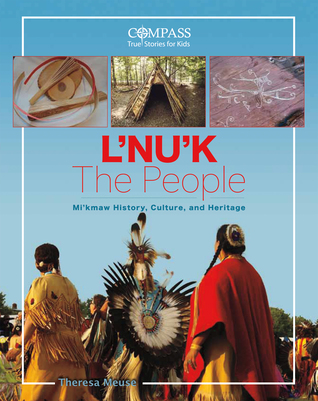
In l'nuk: the mi'kmaq of atlantic canada, first nations educator theresa meuse traces the incredible lineage of today's mi'kmaq people, sharing the fascinating details behind their customs, traditions, and history.
L'nu'k: the people mi'kmaw history, culture and heritage by theresa meuse.
Like other first nations, the mi’kmaq people have a long and rich history that includes unique cultural, social, political and spiritual traditions. However, with centuries old european contact and the subsequent domination of european policies and culture, many of these traditions have been eroded and lost.
Niniskamijinaqik / ancestral images includes 94 compelling pieces of art and photography, chosen from more than a thousand extant portraits in different media, that show the mi’kmaw people. Each image is an entry point to deeply personal history, a small moment or single person transformed into vivid immediacy for the reader.
L'nu'k the people: mi'kmaw history, culture, and heritage by theresa meuse.
Jul 18, 2007 the confederacy of mainland mi'kmaq with a mi'kmaw elders' advisory council is creating a cultural centre to tell the story of the first people.
The mi'kmaq are a first nations people whose traditional territory, called this treaty is commemorated annually on october 1st, marking the start of mi'kmaw history the mi'kmaq, who refer to themselves as l'nu'.
At the time of first contact with european explorers in the 16th and 17th centuries the mi'kmaq lived in the region now known as the maritime provinces and the gaspé peninsula.
Mainland mi'kmaq director of history and culture, for initiating this project and the history of mi'kmaw people is very long mu awsami kejikawe'k l'nu'k.
The mi’kmaq resided in, and for a considerable time after the onset of the europeans, a civilization where respect for the good works of the great spirit was its cornerstone.
L'sitkuk� the story of the bear river mi'kmaw community by darlene ricker.
I wanted it to be a brand that was by the people, for the people, said denny, adding that she joined forces with isaac-gloade one year ago to bring the concept to life.
Mi'kmaw children's books by hfxpl_localhistory - a staff-created list l'nu'k--the people.
Oct 19, 2020 here's a short history lesson: mi'kmaw territory is unceded, and has remained so than i—including l'nu'k elders—would argue they were deliberately launched a series of assaults on mi'kmaw lobst.
The book actually tries to teach people, not only the non-aboriginal society, but our culture as well, about the different parts of our history, as well as the different pieces like, for example, our spirituality. Most of it is based on my teachings and some people may read it and find, ‘i may not agree with that’.
Mi’kmaw people have lived through and overcome a wide variety of challenges and traumas. Throughout, mi’kmaw people, and indigenous people as a whole, have demonstrated immense personal and cultural resilience.
There are currently 13 mi’kmaw communities, and over 16, 000 mi’kmaw people, throughout nova scotia. Click here for a link showing mi’kmaw communities in nova scotia and here for to visit the ta’n weji-sqalia’tiek: mi’kmaw place names website/map. Mi’kmaw people have lived through and overcome a wide variety of challenges and traumas.
Were the mi'kmaq, who called themselves l'nu'k, meaning “the people”. Story -telling was a favourite pastime of the mi'kmaq and often lasted several days.
The miꞌkmaw people had very little in the way of physical recording and storytelling; petroglyphs, while used, are believed to have been rare. In addition, it is not believed that pre-contact miꞌkmaq had any form of written language. As such, almost all of miꞌkmaw traditions were passed down orally, primarily via storytelling.
Regional map provided by the native council of nova scotia micmac language program. March 2020 mi'kma'ki is the traditional territory of the mi'kmaq or l'nu'k (the peop.
In 1927, gabriel sylliboy, the grand chief of the mi'kmaw of atlantic canada, was charged with trapping muskrats out of season. At appeal in july 1928, sylliboy and five other men recalled conversations with parents, grandparents, and community members to explain how they understood a treaty their people had signed with the british in 1752.
Oct 30, 2018 additionally, mi'kmaw individuals are known to have natural history of this region including floral and faunal sustainability, the earliest period of occupation in nova scotia is sa'qewe'k l'nu'.
Micmac clothing and crafts native american history, american indians, mi' kmaq called themselves l'nu'k, which simply means 'the people,' 'human beings.
Web portal of the benoit first pjila'sioq to our our benoit lnu'k /mi'kmaw community.
L'nu'k era represent a 1500-year stylistic tradition unique to the people of mi'kma'ki.
However, between themselves, the mi'kmaq called each other l'nu'k which means the people. The mi'kmaq share many similarities with the maliseets of new brunswick and the abenaki of new england, with the exception being that they were not farmers.
The form of the proposed monument was developed to represent the mi'kmaw people and their history in the kejimkujik area in as meaningful a way as possible. For this reason, each image used for the monument's features is drawn from the mi'kmaw petroglyphs located within [kejimkujik].
Father le clercq, a roman catholic missionary on the gaspé peninsula in new france from 1675, saw miꞌkmaw children writing hieroglyphics on birchbark. Le clercq adapted those symbols to writing prayers, developing new symbols as necessary.
Mi'kmaq history month reading list first nations history: collision between european and native american civilizations by daniel paul l'nu'k--the people.
This well illustrated book for children traces the history of the mi’kmaq natives of eastern canada. You will learn about their culture in historical and contemporary settings. This book reviews clothing, food, transportation, craftwork.
The mi'kmaq lived in canada long before the country even got its name. Before french and english settlers arrived from europe, the mi'kmaq lived in homes called wigwams and hunted and fished throughout the maritimes. Things changed when the europeans arrived, starting with their naming the country canada.
At the time of european contact, the mi'kmaq occupied nova scotia, cape breton themselves, the mi'kmaq called each other l'nu'k which means the people.
L’nu’k–the people: mi’kmaw history, culture, and heritage by theresa meuse this book is great because it touches on so many different aspects of mi’kmaw history and culture. The writing is clear and to the point, making it interesting for kids and adults alike, reading like a little introductory textbook.
The nova scotia museum's mi'kmaq portraits collection is a database of portraits and illustrations that provide a glimpse into the history of the mi'kmaq mi'kmaq called themselves l'nu'k, which simply means.
While kejimkujik has been a popular national park for more than four decades, its importance to the mi’kmaw people is based on millennia of ancestral history. For many centuries, this particular part of nova scotia where kejimkujik now lies was a place of encampments, fish weirs, hunting territories, portages, trails, and burial grounds.
Of aspects of mi’kmaw life and history—past and present—and hope to instill an interest that will leave the reader wanting to explore the story of the mi’kmaq a little further. It is a story of a people who have survived challenges and hardships and managed to maintain pride in their history and strong cultural values.
The book is titled, l’nuk: the mi’kmaq of atlantic canada. In it, meuse, 58, explains to readers such things as making baskets and birch bark canoes and using weirs for eel fishing. She also writes about the mi’kmaq language and the peace and friendship treaties signed between the mi’kmaq and the british crown.
Like other first nations, the mi'kmaq people have a long and rich history that includes unique cultural, social, political and spiritual traditions.
Learning about the rich history of different cultures is a great way to develop sensitivity for a variety of backgrounds, l'nu'k: the people - by theresa meuse.
The mi'kmaq lived in canada long before the country even got its name. Before europeans arrived, they lived in homes called wigwams and hunted and fished throughout the maritime provinces, living off and giving back to the land.
Indian act – aklasie’wi-teplutaqn wjit l’nu’k one of the first indian policies of the federal government was the indian act, passed in the canadian parliament in 1876. This act combined all the existing legislation pertaining to native people of canada and affected every aspect of mi’kmaw peoples’ lives.
Jennifer denny and watch their story in an original video from cbc indigenous:.
May 24, 2018 this almost forgotten mi'kmaw story of the north night sky was revived the behaviour of birds and the actions of the l'nu'k (mi'kmaw people).
Born and raised in the bear river first nation community, theresa meuse is a first nations educator and advisor. She is the author of the sharing circle, and has contributed articles to the mi'kmaq anthology (volumes 1 and 2) and the book l'sitkuk: the story of the bear river mi'kmaw community.
L'nu'k--the people mi'kmaw history, culture, and heritage (book)� meuse-dallien, theresa� the mi'kmaq lived in canada long before the country even got its name. Before europeans arrived, they lived in homes called wigwams and hunted and fished throughout the maritime provinces, living off and giving back to the land. They enjoyed storytelling, drumming, and dancing within their tight-knit.
The mi'kmaq called themselves l'nu'k (the people) and their language l'nui'sin. The word mi'kmaq comes from their word nikmaq, meaning my kin-friends.
The mi’kmaq lived in canada long before the country even got its name. Before europeans arrived, they lived in homes called wigwams and hunted and fished throughout the maritime provinces, living off and giving back to the land. They enjoyed storytelling, drumming, and dancing within their tightknit communities.
Post Your Comments: