Read German and Irish Immigrants in the Midwestern United States, 1850–1900 - Regina Donlon | ePub
Related searches:
Book Review: German and Irish Immigrants in the Midwestern
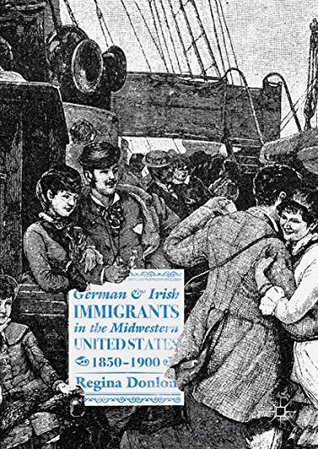
German and Irish Immigrants in the Midwestern United States, 1850–1900
Irish and German Immigration into the United States World
Immigration from Europe: The Irish and Germans
12.1 (Irish and German Immigration of the 1840s and 1850s
Irish Immigration and the Know-Nothings
The Newark Uncovering_ Irish and German Immigration.pdf
The Democratic Party and the Racial Consciousness of Irish
7.36 Irish and German Immigration DBQ - Life, Liberty, and the
Why did irish and german immigration to the united states
THE IRISH AND GERMAN WAVE - CES Working Papers
Compare and contrast the German and Irish immigrants of the
How did German and Irish immigrants view the war in Europe
Amazon.com: German and Irish Immigrants in the Midwestern
Irish and German Immigrants of the Nineteenth Century
Immigration and the Great War (U.S. National Park Service)
When America Despised the Irish: The 19th Century's Refugee
The Rise of Industrial Labor in Antebellum America United States
Irish Immigration and Relocation in U.S. History Classroom
The Treatment Of The Immigration Of Germans To The United States
German and Irish Immigration to Colonial Philadelphia - JSTOR
German, Irish immigrants had triumphs, trials - The News Leader
Irish and German immigration (article) Khan Academy
Irish and German Immigration [ushistory.org]
When America Despised the Irish: The 19th Century’s Refugee
German And Irish Immigration Comparison - WriteWork
Challenges Faced by Immigrants in the 19th Century The
A Closer Look at 175 Years of Immigration in the Archdiocese
Early American Life of Irish and German Immigrants 123 Help Me
Push and Pull Factors - Teachers (U.S. National Park Service)
Irish and German Immigration Quiz - Quizizz
Immigrants in the Union Army - Essential Civil War Curriculum
The Violent Deaths of Irish Immigrants – The Irish in Cincinnati
German immigrants Immigration to the United States
Germans in the Midwest National Museum of American History
Irish & German Immigration to the 19th-Century US - 1250
Immigrant Neighborhoods: The Backbone of St. Louis - NextSTL
German Americans in the American Civil War - Wikipedia
2nd Wave Irish, German, and Chinese Immigrant Venn Diagram
Immigrants—They Get the Job Done - YouTube
German Immigrants and American Politics - DigitalCommons
THE EXPERIENCE OF INDENTURED SERVANTS FROM
The Rise of Immigration Boundless US History
Germans - Immigrants of The 19th Century
German Immigration and Relocation in U.S. History
German Settlers in the Appalachians - Digital Heritage
The Rise of Industrial Labor in Antebellum America US
Notes about Scotch-Irish and German Settlers in Virginia and
Migration to America in the 1700s Ancestry Corporate
Early German and Scots-Irish settlers in English America
Immigrants - The Prohibition Era
Irish Labor on the Transcontinental Railroad
Kentucky Emigration and Immigration • FamilySearch
1748 4143 3912 4034 3179 360 650 4322 1652 1034 4232 3894 4465 4588 431 1064 3145 3940 2305 1841 1380 1026 3150 60 3159 1139 1163 604 334 319 4345 1578 3616 2520
Immigrants from germany and ireland, however, suggests a picture of contract that combined to initiate and maintain german immigration to colonial penn-.
Scorned by the conservative anglo-protestants with their conservative views, throughout the country groups such as the german and irish were greatly stigmatized, especially those who were catholic. Proponents of the prohibition movement used the general xenophobia of the nation, and the stereotyping of immigrants to progress their motives.
German immigrants started to arrive as refugees from the failed 1848 revolution. By the mid-1860s, a third of newark's population was of german origin, and newark's population grew tremendously. Through accounts of the irish and germans, each had distinctions on their first-hand experiences geographically, but they made it work through.
By 1860, new york city had 813, 669 residents, out of which 383, 717 were foreign-born, including 203, 740 irish and 118, 292 germans. The irish migration to the united states in the nineteenth century was motivated by a wide array of forces. The american economy had been expanding rapidly and was an attractive.
However, while the number of german immigrants entering the united states nearly matched that of the irish during the 1850s, the irish were particularly vilified by the country’s anglo-saxon.
Most german immigrants were single women, while most irish immigrants came as married couples.
More than five million immigrants arrived in the united states between 1820 and 1860. Irish, german, and jewish immigrants sought new lives and economic.
With the vast numbers of german and irish coming to america, hostility to them erupted. All of the irish and many of the germans were roman catholic. Most immigrants living in cities became democrats because the party focused on the needs of commoners.
In america, the irish and german immigrants quickly obtained jobs and advanced economically. Despite finding the solutions to their problems, they did not anticipate encountering social discomfort. With the rampant rise of nativism, the irish and german immigrants struggled to assimilate into the american society.
At the hands of the british, widely seen as ‘white negroes. ’ the potato famine that created starvation conditions that cost the lives of millions of irish and forced the out-migration of millions of surviving ones, was less a natural disaster and more a complex set of social conditions created by british landowners (much like.
James the greater parish, in today's dogtown neighborhood, were irish when it was founded in 1861. Alphonsus liguori church (the rock church on north grand) for the growing number of irish immigrants.
Immigrants from ireland brought with them their catholic faith. New catholic churches were established in places where irish were settled, such as illinois valley and new york city. Catholic magazine, in 1820, catholics were the smallest denomination in the united states, with 195,000 members.
The jewish, hungarian, italian, irish and other immigrants arriving in early 1850s america came to a country where both major political parties, the whigs and the democrats, were dominated by leaders who openly proclaimed the innate superiority of the white man above all others, and who defended the legality, and even the sanctity, of slavery.
The first non-english-speaking immigrant group to enter the united states in large numbers, germans played major roles in american economic development,.
Immigrant soldiers formed a striking presence in the union armies. Over 200,000 german and 150,000 irish-born men volunteered to serve in the federal army between 1861 and 1865 and while a majority of these men enlisted in ethnically mixed regiments, units in the army of the potomac such as the irish brigade and the mostly german eleventh corps became synonymous with the ethnic experience.
More than five million immigrants arrived in the united states between 1820 and 1860. Irish, german, and jewish immigrants sought new lives and economic opportunities. By the civil war, nearly one out of every eight americans had been born outside of the united states. A series of push and pull factors drew immigrants to the united states.
The majority moved to the midwestern german triangle, between missouri, ohio� and there he lived near other germans, irish immigrants, and other white.
Census microdata for 66 major cities in 1880 are used to estimate a multilevel model of assortative mating of irish, german, and british immigrants.
Dec 15, 2018 most german immigrants came for economic reasons. While most irish immigrants were catholics, german immigrant groups included.
End with a concluding paragraph in which you relate how these immigrants’ situations are similar to immigrants of today. Just a reminder that the length requirement for the paper is 3-5 pages double spaced, font size 12, mla format. Solution preview for the order on compare and contrast the german and irish immigrants of the 1830s and 1840s.
Thus, the irish immigrant as policeman and ward politician became a fixture in our national mythology, but we can hardly imagine a german equiva- lent.
The city's immigration center at locust point became one of the nation's busiest: anti-catholic riots erupted when large numbers of german and irish catholics.
Irish immigrants also became suspect, because some irish nationalists supported the german side in hopes that a british defeat would result in ireland’s independence. Russian immigrants were feared as possible anarchists and communists, as the “red scare” took hold with the onset of the russian revolution.
114,000 migrants from germany and ireland arrived in the dela- ware river port. 1 irish immigrants to america and three-quarters of the german-speaking.
Between 1830 and 1850 nearly four million people from europe crossed the atlantic to seek the opportunities the united states offered. Irish and german immigrants traveled the long journey to receive the “american dream”, however, their high hopes were far from the reality of how they were received in the united states.
Irish catholic immigration, unfortunately, was opposed by the know-.
Poor and unskilled immigrants from northern europe and asia poured into the united states in the mid-1800s. Most of the european immigrants were german and irish, and under the law they were.
Also, two expressions with the same meaning will unnecessarily confuse students. Both anderson and plonk families include scotch-irish, english, and german names. Plonk relations have scotch-irish or english names espey, oates, means, motley, and simpson.
In 1893, a group called the “immigration restriction league,” along with other similarly inclined organizations, began to press congress for severe curtailment of foreign immigration. Irish and german catholic immigration was opposed in the 1850s by the nativist/know-nothing movement, originating in new york in 1843 as the american.
This essay on irish and german immigration to the 19th-century us was written and submitted by your fellow student. You are free to use it for research and reference purposes in order to write your own paper; however, you must cite it accordingly�.
In 1860, wisconsin's irish population numbered 49,961; in 1880, 41,907; and in 1900, 23,544. The irish began to leave wisconsin in 1860 as german immigrants.
The unrest, unemployment and hardships they were experiencing back home are the reasons for the massive irish and german immigration in the 1840s. Specifically, there was famine in ireland during this time because of continued crop failure.
Library of congress, old stone church, timber ridge, rockbridge county, virginia, digital file from original negative. In the 1600s, many scots migrated to the ulster area of ireland as they tried to escape war, religious conflict, poverty, drought and conflict with the english.
Famine and political revolution in europe led millions of irish and german citizens to immigrate to america in the mid-nineteenth century. If you're seeing this message, it means we're having trouble loading external resources on our website.
German immigrants settled in both neighborhoods, along with the irish in old north and the bohemians in soulard.
Foreign immigrant groups were ranked in each county from the largest number to the smallest. With few exceptions, the counties with primary concentrations of foreigners included distinctive blends of germans, irish, and english immigrants ranked first, second, or third.
Understand the factors that led to high irish immigration during the 19th century. Use critical thinking to analyze the patterns of irish immigration during the 19th century. Use critical thinking skills to analyze the differences between life in ireland and pennsylvania for irish immigrants during the 19th century.
Instead, they and the future irish and german generations have melted their immigrant status and molded their american-irish and american-german identity. Though the irish and germans developed a more successful life in america than in their homelands, they simultaneously contributed to something bigger: they helped built america.
The main flow of these migrants still came, as in colonial days, from northern europe, especially ireland, germany and britain.
During the 19th century some 1,452,870 germans immigrated to america. After 1850 they were the dominant immigrant group and repeatedly outnumbered the irish each subsequent decade. Prior to the 19th century german immigrants were typically affiliated with a christian religious sect and were seeking religious freedom.
Before the american civil war, most immigrants arrived in the united states from great britain, germany, and ireland.
At the beginning of world war i, both german as well as irish immigrants wanted the united states to remain neutral. However, after hearing about war atrocities and the sinking of the lusitania.
Oct 27, 2017 on the massive wave of irish and german immigrants who arrived on the american continent in the early 19th century, and how the american.
“an innovative, scholarly and highly readable comparative history of german and irish immigrants to america’s midwest, which draws upon rich demographic and textual materials to unlock the parallel and entwined lives of what were mid-nineteenth-century america’s largest european immigrant groups.
The majority of german immigrants to the united states were from the palatinate, a fertile area of the southern rhine river valley. In the 17 th and 18 th centuries the people of the palatinate suffered from seemingly constant hardship. Peasants were dominated by feudal lords who taxed the poor heavily in order to support their lavish lifestyles.
During the nineteenth century and the early twentieth century the rise of immigration centered around two specific ethnic groups.
Where did german and irish immigrants tend to settle in the united states? cities� which statement best describes the germans who came to the united states.
The life of many an irish immigrant in the 19th century was the complete opposite of the “american dream. ” seeking a safe haven away from starvation and disease, irish immigrants found themselves in danger of death and disease once again.
Students will examine why europeans immigrated to the united states.
Other early immigrants included small groups of french, swiss, and welsh. During the mid-19th century the ohio river brought many german immigrants and settlers from new england and the middle atlantic states.
German and irish immigrants, native of europe, fled across the atlantic ocean to the heartland of the united states for different reasons, causing numerous different effects on the people and the land they came to inhabit.
Us history in the four waves and presents the migration of the irish and germans to the usa at the middle.
Immigrants from the german-speaking areas of europe (the various german states were united politically only after 1871) comprise one of the most significant elements of the population of both the united states and canada. Immigrants from german lands accounted for at least 6 million.
This difference in english migration, together with german and scotch-irish immigration, created today's standard american english dialect, with its well-known differences from standard british english. Virginia settlement the english immigrants william randolph and his wife mary isham have been called the adam.
The temperance movement in part was spurred on by the enormous amount of immigrants in the mid-1800s. Eric foner notes that “over 4 million peopleentered the united states” between 1840 and 1860 and that most of the immigrants were german or irish (foner 334).
Irish workers on the transcontinental railroad, although more respected than chinese workers, were not at all favored. This immense amount of irish immigration, of poverty-stricken and filthy irish, was not fully embraced by americans. On the railway, the irish were seen as hard workers, but also known for going on strike and drinking too much.
In the early and mid-19th century, nearly all of the immigrants coming to the united states arrived from northern and western europe.
Learn vocabulary, terms, and more with flashcards, games, and other study tools.
It was the potato famine of 1845-1851, which was one of the most severe disasters in irish history, that initiated the greatest departure of irish immigrants to the united states.
Andrew jackson in colonial times, the irish population in america was second in number only to the english.
-worked in the agriculture industry out west, but some immigrants.
In fact, the german immigration to jefferson county and watertown was so pockets of yankee, irish, bohemian, and welsh settlers in watertown, the germans,.
In the second half of the nineteenth century, hundreds of thousands of german and irish immigrants left europe for the united states. Many settled in the northeast, but some boarded trains and made their way west. Focusing on the cities of fort wayne, indiana and st louis, missouri, regina donlon.
The german, irish and italian immigrants who arrived in america during the 1800s often faced prejudice and mistrust. Others discovered that the challenges they had fled from, such as poverty or religious persecution, were to be encountered in america as well.
Apr 19, 2019 many parallels when it comes to immigrants, elections, and propaganda during wwi, the 1916 easter rising, and today.
The first waves of immigrants coming into wisconsin were the irish and germans.
Post Your Comments: