Full Download Francesca Woodman's Dark Gaze: The Diazotypes and Other Late Works - Claire Raymond | ePub
Related searches:
Haunted Genius: The Tragic Life and Death of Francesca Woodman
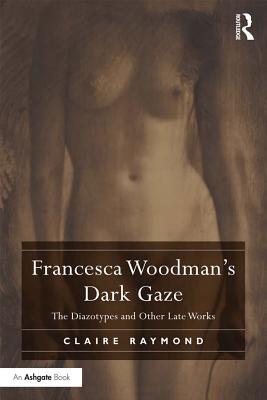
Francesca Woodman's Dark Gaze: The Diazotypes and Other Late Works
Amazon.com: Francesca Woodman's Dark Gaze: The Diazotypes and
Transitory Ghosts and Angels in the Photography of Francesca
How is the male gaze examined and critiqued in the works of
Download [PDF] Francesca Woodman And The Kantian Sublime
“THE WOODMANS”: Art, death and Francesca Woodman Butler's
Francesca Woodman's Dark Gaze The Diazotypes and Other Late
Francesca Woodman in some other time and place photography
Women Photographers and Feminist Aesthetics - 1st Edition
Conference Jefferson Journal of Science and Culture
(PDF) Multiple Expeausures: Identity and Alterity in the
(PDF) Francesca Woodman and the Kantian Sublime (introduction
The Photographic Uncanny - Photography, Homelessness, and
Sanctuaries and Architectonics Taylor & Francis Group
francesca woodman – Yes Sir: The Feminine in Art and Literature
Francesca Woodman s Photography: Death and the Image One More
Research Point: Woodman, Brotherus and Wearing Context
1338 3900 1870 2583 89 4799 1134 4088 1571 747 1802 4759 4237 4973 833 2105 643 4477 3855 3511 3150 2241 4958 4089 2107 66 797 1400 4079
Born in 1958 to the american painter, photographer and ceramicist, george woodman and his wife, fellow artist betty woodman, francesca began to shoot.
Nov 16, 2011 spare and elegant, these black and white images sometimes read like lost illustrations from early feminist charlotte perkins gilman's 19th century.
At the age of thirteen francesca woodman took her first self-portrait. Installation view, francesca woodman, zigzag, victoria miro mayfair, with her body as both the object of the gaze and the acting subject behind the camera.
Francesca woodman's dark gaze is a luminous investigation of the haunting, monumental late works of an artist who would not survive to her twenty-third birthday. Claire raymond reveals how, at the turn of the millenium, woodman was in the process of a fierce engagement with experimental photography, the history of art and architecture, and the very nature of image making itself.
Nov 13, 2012 francesca woodman was three months shy of her twenty-third birthday to seduce the viewer's gaze into an imaginative space of private fantasy. Model “ compositionally” interacting with a mirror in a dark interio.
Francesca woodman (1958-1981) although francesca woodman died exceptionally young, at 22, and never got to experience the international acclaim she garners today, the american photographer amassed a powerful body of work in her short career.
Nov 28, 2011 now on display at sfmoma, the exhibition features 160 vintage, predominantly black-and-white photographs, some inscribed with lyrical,.
The virtuosic effect that woodman achieves in her photographs stems from her images’ interplay between the performance of that cultural icon the “schoolgirl” and the self-‐‑possessed gaze of the artist, herself, taking the photograph—a gaze that frames the rhetoric of her performance of femme-‐‑enfant.
An example of this sensitive arranging is shown in a monochrome photograph where woodman stands sideways to the viewer, arms above her head so that she forms a black line against the wall. Parallel to her is a hanging skinned fox, its head, legs and tail dark, vulpine and dramatic against the surrounding white.
Her photographs were shown in a number of major international exhibitions and they have inspired artists all over the world.
“francesca woodman’s dark gaze is a luminous investigation of the haunting, monumental “late” works of an artist who would not survive to her twenty-third birthday. Claire raymond reveals how, at the turn of the millenium, woodman was in the process of a fierce engagement with experimental photography, the history of art and architecture, and the very nature of image making itself.
In one photo, woodman stretches her mouth into a dark cavity without clear edges. In another, she pinches her nude body so the flesh bulges out like excess meat. This is not an exercise in self-love but in self-transfiguration, exaggerating the way we encounter our reflection in the mirror each morning, slightly altered.
Francesca woodman's dark gaze the diazotypes and other late works.
Mar 5, 2021 francesca woodman is well-known for her black and white photographic works depicting young women.
Largely unknown during her lifetime, her photographs were first introduced to the public at a wellesley college exhibition in 1986, five years after her death. The show drew a great deal of attention; american critic rosalind krauss, who saw woodman’s photographs as an attempt to resist the male gaze, became her champion.
Never the full figure, never a frontal view, everything always oblique and partial.
Results 1 - 17 of 17 francesca woodman: on being an angel francesca woodman's dark gaze: the diazotypes and other late works.
Francesca woodman: portrait of a reputation presented an early episode in the artistic life of american artist francesca woodman check out all the francesca woodman programs happening at the museum here! black lives matter.
Francesca woodman's dark gaze résumé focusing on the later work of the american photographer francesca woodman (1958-1981), claire raymond takes up the question of the disintegrative condition of the art she produced in the last year of her life.
The photograph, as the title suggests, was taken in providence, rhode island, in 1976, and is one of a series of similar images. Woodman created the dark impression on the floor by lying on her back in photosensitive powder scattered over the floorboards. The areas of powder exposed to light turned white, while those in shadow turned black.
Michèle kieffer questions whether woodman's evocative work can be divided from the darkness of her life.
Focusing on the later work of the american photographer francesca woodman (1958-1981), claire raymond takes up the question of the disintegrative condition of the art she produced in the last year of her life.
Photograph: the estate of francesca woodman, courtesy george and betty woodman and victoria miro gallery.
Francesca woodman’s dark gaze the diazotypes and other late works focusing on the later work of the american photographer francesca woodman (1958-1981), claire raymond takes up the question of the disintegrative condition of the art she produced in the last year of her life.
She is the author of francesca woodman’s dark gaze: the diazotypes and other late works; witnessing sadism in texts of the american south; and francesca woodman and the kantian sublime. Her research focuses on aesthetics, poetics, and the intersections of cultural trauma and representation.
Francesca was born into the woodman’s artistic family in the spring of 1958 in denver colorado. Her father, george woodman, is a painter who later in his career decided to also focus on photography, following his daughter’s media as a way to give continuation to her artworks.
Interested in how people relate to space, and how the three-dimensional world can be reconciled with the two dimensions of the photographic image, woodman played complex games of hide-and-seek with her camera. One of the enduring appeals of her work is the way in which she constructs enigmas that trap our gaze.
Uncannily, perhaps melancholically, we identify with this presence, this young woman hauntingly revealing herself, playing with a camera in a ruined house, who seems so near at hand, so knowable, seemingly wanting to be cared for among so much that is falling apart, but who turns out to be always herself deconstructing, shifting beyond our focus, obscured and ultimately inaccessible.
She engages directly with the camera, her gaze disquieting, confrontational, and yet vulnerable. Woodman’s polka-dot dress is a regular staple of her risd period. She is wearing it in several self-portraits taken against the same wall, crouching as if to fit herself within the square frame or turning her back to the camera in a blurry jump.
Jun 10, 2016 on january 19, 1981, francesca woodman committed suicide, jumping out of a loft window on the east side of new york.
Woodman was someone who began photographing when she was a child, and who was embarking on a career when it came to an abrupt end, leaving behind a body of work that is provocative and full of unanswered questions. Her photographs represent an unusually coherent vision of an artist who had barely reached adulthood.
Francesca woodman (1958-81) was born in denver, colorado, to an artistic family and began experimenting with photography as a teenager. In 1975 she attended the rhode island school of design, and in 1979 she moved to new york to attempt to build a career in photography. Woodman's working career was intense but brief, cut short by her death in 1981.
In self portrait at thirteen (colorado,1972), the artist's long dark hair obscures her face hindering the camera's inherent descriptive and informative qualities.
In on being an angel(1976), she is seen bending backward as light falls on her white body.
In it, woodman is naked, with only a scarf around her neck and a ribbon holding her hair in a side ponytail. She stands with her hands on her hips, her face awash in bright light, and stares directly at the camera, her gaze unusually confrontational.
Francesca woodman's dark gaze: the diazotypes and other late works (english edition) edición kindle por claire raymond (autor) formato: edición kindle ver todos los formatos y ediciones ocultar otros formatos y ediciones.
1 / 16 francesca woodman is famed for her extraordinary output of haunting black and white portraits of herself and occasionally other models. She frequently photographed herself nude, often with an object, a mirror or a piece of furniture obscurring her body or face. She is known for long-exposures, which imprinted her film with ghostly figures.
Francesca woodman's dark gaze: the diazotypes and other late works by claire raymond synopsis: focusing on the later work of the american photographer francesca woodman (1958-1981), claire raymond.
The posthumous voice in women’s writing (2006), francesca woodman and the kantian sublime (2010), witnessing sadism in texts of the american south (2014), francesca woodman's dark gaze (2016, women photographers and feminist aesthetics (2017), 16 ways of looking at a photograph (2019), and the photographic uncanny (2019); as well as six books.
The composition of woodman’s images, i am intrigued how the intent of the image making can alter the outcome of how the work is perceived. Even though woodman is unclothed in many of her images, her body is seen without the objectification of the male gaze. Woodman’s portraits are easily connected to her implied mental anguish.
Dec 16, 2017 francesca woodman produced universally commanding and an unusual low perspective, and the play of extreme light and dark she shows.
The book features a preface by ann gabhart and text by abigail solomon- godeau and rosalind krauss.
Francesca’s work awed her parents and brother charles as much as it did her classmates and teachers. It’s now highly valued and in a way overshadows that of george and betty.
Francesca woodman, “untitled,” providence, rhode island (1975-1976) in this image, woodman gazes at the camera, gesturing oddly towards a door that stands ajar, as though she is controlling it with a sort of telepathy. Similarly, woodman had a powerful command over her art in a way that was almost supernatural.
Francesca woodman was three months shy of her twenty-third birthday when she took her own life in 1981, and the san francisco museum of modern art’s (sfmoma) surprisingly extensive retrospective of her work, curated by corey keller, is haunted by this fact. One reason is the attention and acclaim that has been given to scott willis’s 2010 documentary titled the woodmans, which chronicled.
For woodman, who died in 1981 at twenty-two, convincing viewers to accept this predicament as crisis-worthy was a body-centered ambition. Feminist critics have long noted how she used her body to simultaneously court and reject “the male gaze.
Francesca woodman’s dark gaze: the diazotypes and other late works.
Francesca woodman's dark gaze alison dunhill's extensive thesis is also available as downloadable individual chapters by visiting the website linked on the title; almost a square: the photographic books of francesca woodman and relationship to surrealism.
Francesca woodman's dark gaze de claire raymond para recomendar esta obra a um amigo basta preencher o seu nome e email, bem como o nome e email da pessoa a quem pretende fazer a sugestão. Se quiser pode ainda acrescentar um pequeno comentário, de seguida clique em 'confirmar'.
Apr 13, 2016 francesca woodman was a late 20th century american photographer known for her dramatically staged black and white self-portraits.
Francesca woodman: portrait of a reputation: burnett abrams, nora, sawyer, drew, francesca woodman's dark gaze: the diazotypes and other late works.
In the first photograph francesca woodman appears wearing her dark overcoat, next to a long roll of white paper hanging vertically from the wall, while in the following image she is observing with interest, after an omitted interval of time that we know has gone by even if its passage has not been recorded, some marks on the paper from which.
Francesca woodman, that she succumbed to what her father calls the “psychic risk in being an artist” is the story’s dark specter.
New york artist francesca woodman’s heart breaking life story has often obscured the quality of her work, which in its haunting effervesce challenges the viewer’s perception of the artist and her medium. Michèle kieffer questions whether woodman’s evocative work can be divided from the darkness of her life.
(american, 1958–1981) was an american photographer known for her black-and-white madrid, spain (exhibition catalog); 2009: the female gaze: women look at women,�.
A 2010 book examining the relevance of woodman's photography as a way of understanding kant's theory of the sublime. It contains a facsimile of an italian school exercise book to which woodman added photographs, as well as an afterword by woodman's father.
Woodman holds a rod to release the shutter which once intentionally blurred and out of focus transforms to become an otherworldly shard of darkness. Her face is covered completely by her hair and the space around her is composed of fragmented elements, including a door, the under lit bench upon which she sits, and an empty chair.
This black and white square-format photograph shows the artist francesca woodman crouching against a dilapidated wall. The wall is heavily marked and stained, with two sections of wallpaper remnants, one darker and one lighter, to the right of the frame and a black mark above the artist’s head. There is a skirting board where the wall meets the wooden floor, which is strewn with paint chips and debris.
The late francesca woodman, a native of denver, colorado, whose death by suicide in new york in 1981 at the age of 23 robbed art of a precious talent, was one of the 20th century’s great.
May 22, 2014 darkness and half-light are frequent with the figures part-visible. Leipzig-born max klinger, who died in 1920, was one of her favourite artists.
In an empty room, fixed and balletic, dancing with someone not there. Light cast the cords of your neck leading faded shadows, black and white exposures show off the silver of your beauty, the curious dream, the eye, and me in another time.
Black-and-white and mostly small—roughly 6 inches by 6 inches—woodman's photographs are typically termed “moody.
1 woodman's black and white photographs ask to be looked at closely, carefully and fussily. Her images draw attention to the hardness of walls, to the texture and weight of objects, and to her own body which insistently edges into the frames and the corners of the photograph's space.
A designer's research manual: succeed in design by knowing your clients and what they really need epub/pdf book by jennifer visocky o'grady.
Read francesca woodman's dark gaze the diazotypes and other late works by claire raymond available from rakuten kobo. Focusing on the later work of the american photographer francesca woodman (1958-1981), claire raymond takes up the quest.
For me, ‘on being an angel’ tells a story about francesca woodman. It is a story about being born: about entering this world and embarking on the journey of a photographer. One of the very first prints shows the “self-portrait” of 13 year old francesca at the very beginning of her career.
This picture, taken in boulder, woodman's hometown in rhode island, features the artist intertwined with the roots of a tree. Immersed in the water, the artist's horizontal naked body is supported by the undergrowth. Her long hair floats, whilst her fair skin provides good contrast to the dark shadows cast all around.
Newell is first and foremost a passionate lover of film— especially horror.
The objective of this essay is to explore how visual representation in three different artworks actively question the male gaze and create a discourse surrounding women’s role in visual culture. Francesca woodman was best known for her black and white photographs, typically featuring female models or herself.
Francesca woodman on being an angel anna tellgren throughout her career, the young american photographer francesca woodman revisited the theme of angels. In on being an angel (1976), she is seen bending backward as light falls on her white body.
Post Your Comments: