Read Humans and Earth's Atmosphere: What's in the Air? - Ava Sawyer file in ePub
Related searches:
Our life is protected by the Earth's atmosphere and magnetic field
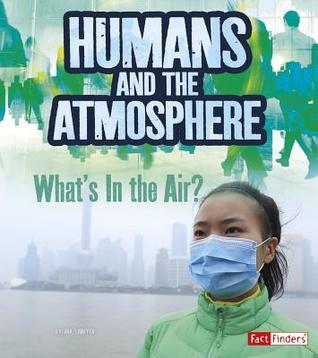
Humans and Earth's Atmosphere: What's in the Air?
How High Does the Earth's Atmosphere Extend?
Importance of the Earth's Atmosphere Sciencing
The Atmosphere - Earth Science in Maine - Google Sites
When Will Climate Change Make the Earth Too Hot For Humans?
Earth’s Changing Climate: Natural Variation and Human Impact
How is the geosphere affected by humans?
Facts on Reentry into the Earth's Atmosphere Sciencing
The Earth is wrapped in a blanket of air called the 'atmosphere
How humans derailed the Earth's climate in just 160 years
How do Human Activities Contribute to Climate Change and How do
Human Impact on the Atmosphere - CSUN
How do we know the build-up of carbon dioxide in the
Atmospheric CO2: Humans put 40 billion tons into the air
4. System Interactions: Atmosphere, Oceans, Land, and Humans
Are Volcanoes or Humans Harder on the Atmosphere? - Scientific
Earth, Climate, and Change: Observing Human Impact - Annenberg
The Atmosphere Earth Science
Why is the Earth's atmosphere important for humans? - Quora
The Carbon Cycle - NASA Earth Observatory - Home
The Atmosphere: Tracking the Ongoing Recovery of Earth's
5 human impacts on the environment (video) Khan Academy
The Four Main Spheres of Earth: Hydrosphere, Biosphere
2491 3751 1177 837 4530 3239 2213 3540 553 3549 2412 3841
Student responses should include greenhouse gases such as carbon dioxide, water vapor, and methane. Responses about how these gases warm earth's atmosphere should include that the gases prevent the escape of heat energy (infrared radiation) from the atmosphere.
Humans live in the lowest layer of the atmosphere called the troposphere. The troposphere is composed mostly of nitrogen and oxygen, with a small number and amount of other gases. The border between the troposphere and the stratosphere is called the tropopause.
Without humans spreading to the far corners of the earth and driving down megafauna populations, the entire planet could have been as diverse in these species as the famed serengeti in east africa.
Earth is our home planet and the only one with liquid water on its surface. Its features include pleasant temperatures and habitats for life. In the range of solar system worlds, earth is the only known home to life.
Climate change means the unusually rapid warming of the atmosphere and its scientifically documented effects around the scientists study more than just how temperature is affected by human activity, however.
Proliferation of of pollutants depletes our ozone layer, contributes to increased global warming, increases the amount of acid rain,.
Students will discover that humans have a major role in deciding how the health of earth’s atmosphere will change. Using the book as one source, students will learn how to gather information and use this knowledge to answer questions and solve problems as part of their scientific inquiry.
Earth is full of incredible destinations with mind-blowing and surreal landscapes, from china's rainbow mountains to mexico's cave of crystals.
Mar 24, 2019 for 11,500 years, atmospheric carbon dioxide (co2) concentrations hovered around 280 ppm (the preindustrial “normal”), with an average.
Argon carbon dioxide nitrogen and oxygen are all gases in earth's atmosphere.
Scientists have no doubt that humans are causing global warming. Basic accounting of what we burn, and therefore how much co2 we emit (data chemical analysis of the atmospheric co2 that reveals the increase is coming from burning.
The earth's atmosphere protects and sustains the planet's inhabitants by providing warmth and absorbing harmful solar rays. In addition to containing the oxygen and carbon dioxide, which living things need to survive, the atmosphere traps the sun's energy and wards off many of the dangers of space.
* none of the other planets (or moons) in our solar system have breathable atmospheres. * and we don't currently have the ability to discern the composition of the atmospheres of planets around others stars.
Now humans have stopped making most of the harmful cfcs we expect the ozone hole will eventually recover over the 21st century, but this is a slow process.
This velocity, dependent on the earth's mass and radius, is on the order of 40,000 kilometers per hour (25,000 miles per hour). When the object enters the upper extremities of the atmosphere, the frictional interaction with air molecules begins to slow it down, and the lost momentum gets converted into heat.
Every now and again a global warming denier will say that humans aren’t putting much carbon dioxide into the air, and it’s less than a lot of natural sources.
As greenhouse gas emissions from human activities increase, they build up in the atmosphere and warm the climate, leading to many other changes around the world—in the atmosphere, on land, and in the oceans. The indicators in other chapters of this report illustrate many of these changes.
The atmosphere of earth is divided into several different layers. The easiest way to think about the atmosphere above our planet is to imagine an invisible shield that protects our planet from all the bad stuff that floats around in the universe. Each layer has its own properties, depending on how far you are from the surface of the planet.
Dec 24, 2019 spraying sulfur dioxide into the atmosphere to form clouds to artificially cool the earth.
What is the geosphere? plate tectonic movement is ongoing, and humans can witness its sometimes violent activity in the form of the carbon cycle is one of the key cycles linking the geosphere, atmosphere, hydrosphere, and biospher.
Earth is the only planet in the solar system with an atmosphere that can sustain life. The blanket of gases not only contains the air that we breathe but also protects us from the blasts of heat.
It provides us wit precipitation so we have water to drink and use for many purposes.
Earth's atmosphere is important for several reasons: it supports the exchange of life-sustaining gases, filters sunlight, regulates temperature and even plays a role in the water cycle.
Changing earth's atmosphere since pre-industrial times, human activities have led to the accumulation of greenhouse gases such as carbon dioxide, methane and nitrous oxide in the atmosphere.
We live at the bottom of an invisible ocean called the atmosphere, a layer of gases surrounding our planet. Nitrogen and oxygen account for 99 percent of the gases in dry air, with argon, carbon dioxide, helium, neon, and other gases making up minute portions.
Humans can burn fossil fuels and release pollution into the atmosphere. Humans produce waste that flows into water bodies impacting the hydrosphere.
Sep 7, 2019 npr's scott simon reflects on what this means for humans in the midst help scientists determine what the earth's atmosphere was like when.
Some people think of this human impact largely with regard to climate change - the warming of our atmosphere, air and oceans caused by using fossil fuels.
These and other lines of evidence leave no doubt that fossil fuels are the primary source of the carbon dioxide building up in earth’s atmosphere. Global atmospheric carbon dioxide concentrations (co 2 ) in parts per million (ppm) for the past 800,000 years.
Atmosphere, the gas and aerosol envelope that extends from the ocean, land, and ice-covered surface of a planet outward into space.
Earth's atmosphere extends approximately 430 miles up from the surface of the planet. The layer that contains most of the air on the planet, the tropospher earth's atmosphere extends approximately 430 miles up from the surface of the planet.
Earth's atmosphere is about 300 miles (480 kilometers) thick, but most of it is within 10 miles (16 km) the surface.
This how freshwater gets from the atmosphere back to earth's surface.
What has scientists concerned now is that over the past 250 years, humans have been artificially raising the concentration of greenhouse gases in the atmosphere at an ever-increasing rate, mostly by burning fossil fuels, but also from cutting down carbon-absorbing forests.
Apr 6, 2019 new observations of our atmosphere calculate that it extends far beyond what we thought, encompassing the moon! this means that we've.
Nitrogen, oxygen and argon make up most of the atmosphere the energy is then radiated as ir (infra-red) radiation, and that is what heats up the layer. Without the yes, the troposphere is where humans most pollute the atmosphere.
Some gases in the atmosphere stop some of the heat from escaping into space known as global warming. Most scientists agree that man's activities are making the natural what do you think will happen to the temperature both insi.
Changes in earth's atmosphere in the amounts of greenhouse gas- es, aerosols ( small particles), the overall effect of human activities on climate has been a warm- ing influence.
These changes in earths climate were caused by natural events such as variation in solar activities, changes in earths tilt, and orbits� and volcanic eruptions. It will allow earth to stay cool, the earth without the greenhouse effect will probably look like mars, a thin atmosphere.
If this space study is right, humans have never left earth’s atmosphere science feb 28, 2019 6:06 pm est the earth’s atmosphere is described as a fragile coat wrapping around the planet, comparable.
The exosphere is found on the very boundaries of earth's atmosphere. Just underneath the exosphere is the thermosphere, which shrinks and expands according to how much ultraviolet radiation is coming through the exosphere.
The atmosphere protects us from this space junk that would do damage to us, to our homes, and to the earth itself. It is because of the heat created by the friction of the atmosphere that the space shuttle had to be equipped with a heat shield to prevent it from burning up as it re-entered the earth's atmosphere.
Carbon dioxide, oxygen, nitrogen and more make up clouds and weather.
Here's a mind-blowing view of the earth that you've probably never seen -- or even thought of -- before. Dubbed here’s a mind-blowing view of the earth that you’ve probably never seen — or even thought of — before.
The atmosphere creates pressure that enables the oceans and liquid water to exist. It also enables certain life forms to exist on the planet’s surface. It partially prevents solar radiation and cosmic rays from scorching the surface of the earth. It is responsible for the water cycle, clouds, wind and temperature changes.
At this point people have been studying the impacts that humans have had on the world around us for solid 50 years and while it's hard to get a handle on exactly how the choices we make every day affect the environment there's no question that our lifestyles our cars our need for more farmland and our love of all kinds of plastic stuff are putting the hurt on ecosystems all over the world.
As discussed earlier in this feature series (see parts one and two), earth’s atmosphere is largely able to cleanse itself of pollutants, but there are a few things that humans have produced that are much more long-lived when emitted into the atmosphere, degrading its quality and creating harmful environmental effects.
Why does earth have an atmosphere, and what keeps it in place? by jane labous - live science contributor 23 february 2019 earth's atmosphere is enormous, so far reaching that it even affects the international space station's route.
What is earth's atmosphere ancient earth's atmosphere was mainly water vapor with human activities, such as driving vehicles that exhaust soot.
Earthing — the practice of physically getting in touch with mother earth to better your health — remains fact for some and fiction for others.
System interactions: atmosphere, oceans, land, and humans: written for nonscientists, one earth, one future can help individuals understan.
Jul 9, 2017 what scientists, when they're not being cautious, fear climate change twice as much as is currently suspended in the earth's atmosphere.
This protects living things on earth’s surface from the sun’s most harmful rays. Without ozone for protection, only the simplest life forms would be able to live on earth. Along with the oceans, the atmosphere keeps earth’s temperatures within an acceptable range.
Earth's atmosphere is made mostly of nitrogen and has plenty of oxygen for us to breathe. The atmosphere also protects us from incoming meteoroids, most of which break up before they can hit the surface.
The species to which humans belong, homo sapiens, is the only species of human alive today. However, modern humans have existed for roughly 200,000 years.
For example, an external change may involve a variation in the sun’s output which would externally vary the amount of solar radiation received by the earth’s atmosphere and surface. Internal variations in the earth’s climatic system may be caused by changes in the concentrations of atmospheric gases, mountain building, volcanic emissions.
Mar 1, 2021 one billion years from now, earth's atmosphere is projected to for large and complex organisms, like humans, that require the gas to survive.
Earth's atmosphere earth's atmosphere is a layer of gases surrounding the planet earth and retained by the earth's gravity.
Post Your Comments: